



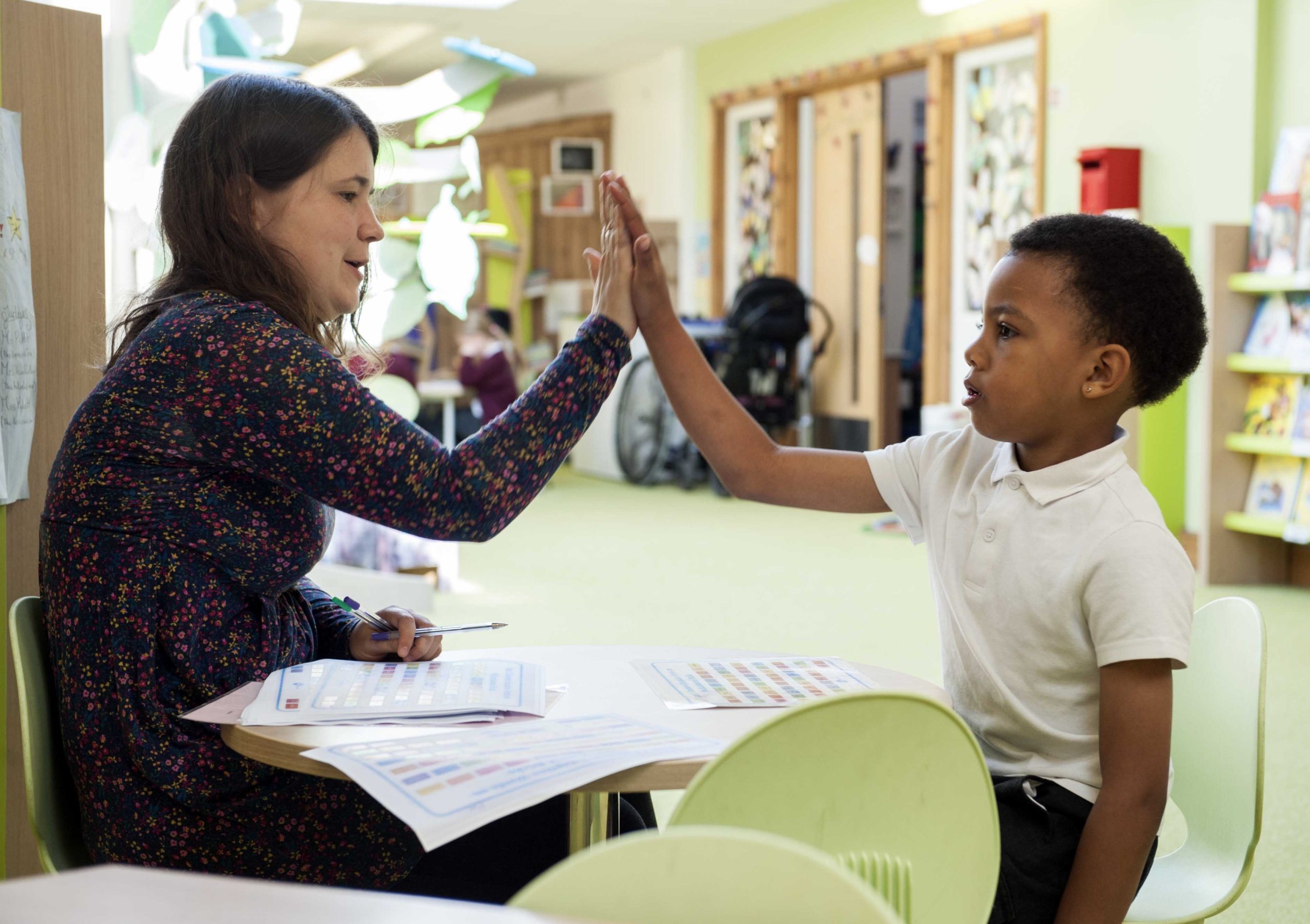
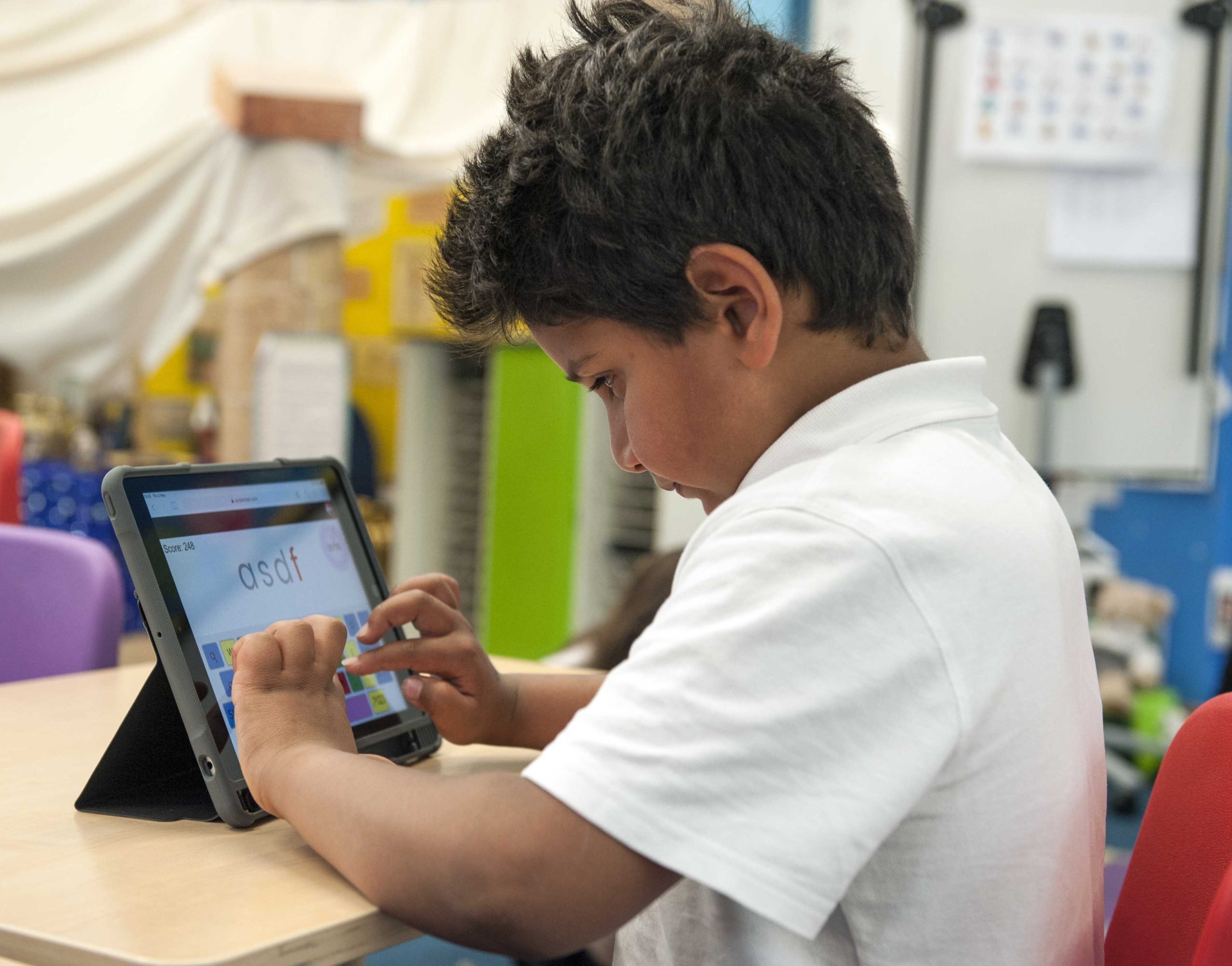
Our Foundation Stage consists of two Reception classes for children aged 4 to 5 years old. The classes are named Dragonflies and Bumblebees, supported by a dedicated team of teaching assistants who work closely with the children to enhance their learning and development.
Children enter the Foundation Stage each morning via the back gate near the staff car park, where teachers greet them from 8.45am. Parents collect their children at 3.05pm from the Foundation outdoor area.
Each classroom has direct access to its own outdoor learning environment, including a mud kitchen, swing, and a variety of activities designed to support exploration and play. Children also benefit from an outdoor track for balance‑bike riding and a small forest area for early woodland learning experiences.
To support a smooth transition into school, we offer parent workshops in the summer before children start and again in the autumn term. Children also have opportunities to visit the school during the summer term, initially with their parents and later independently.
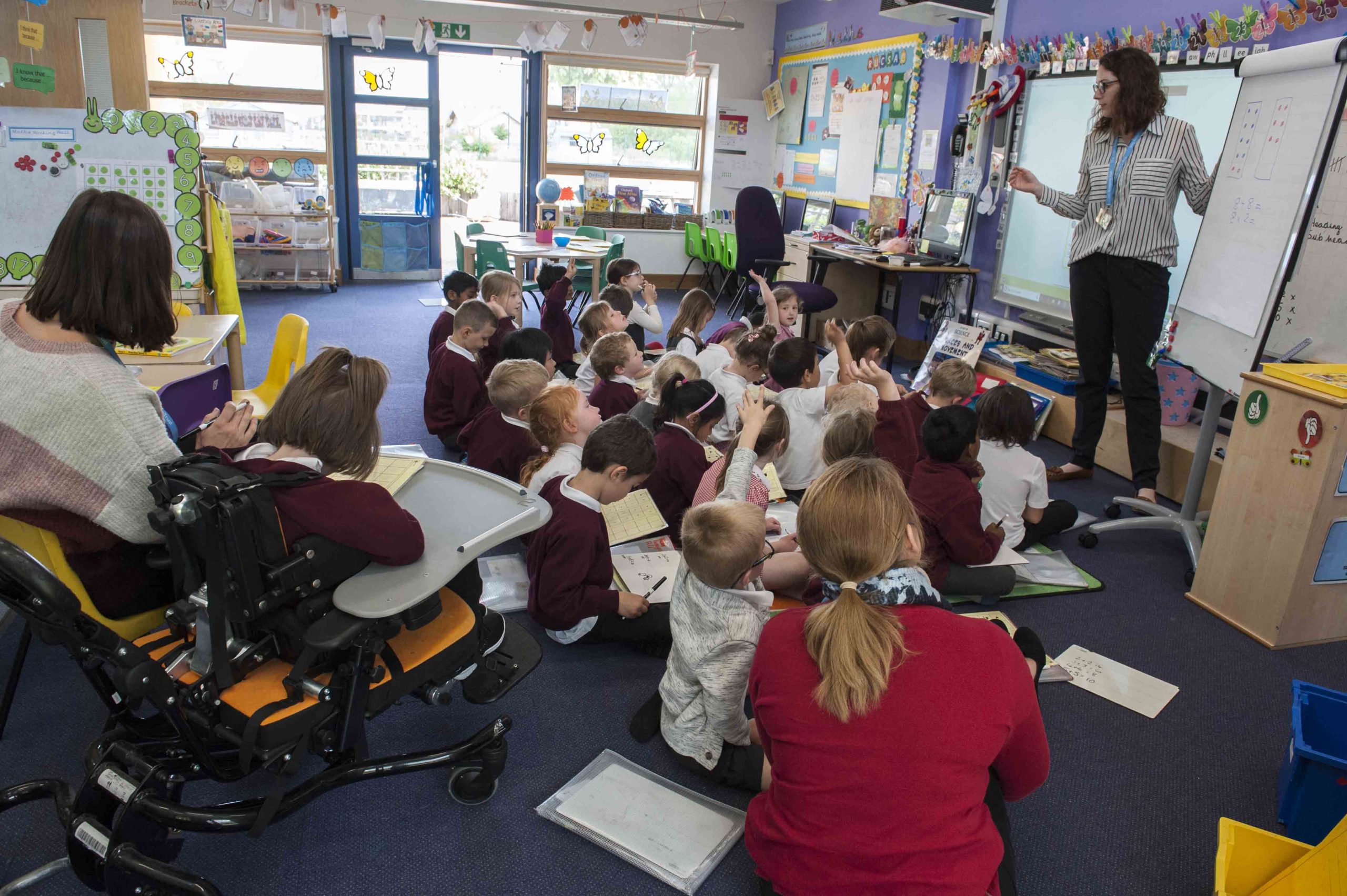
Key Stage 1 is made up of two Year One classes and two Year Two classes, catering for children aged 5 to 7 years. The Year One classes are Ladybirds and Butterflies, and the Year Two classes are Hedgehogs and Robins.
In Year One, children continue to learn through an early‑years‑informed pedagogy with access to continuous provision throughout the day. In Year Two, they transition towards a more formalised approach to learning. A team of teaching assistants works across the phase to support children’s progress.
Children enter Key Stage 1 each morning through the front playground, where teachers welcome them from 8.45am. They are dismissed from the same doors at 3.15pm.
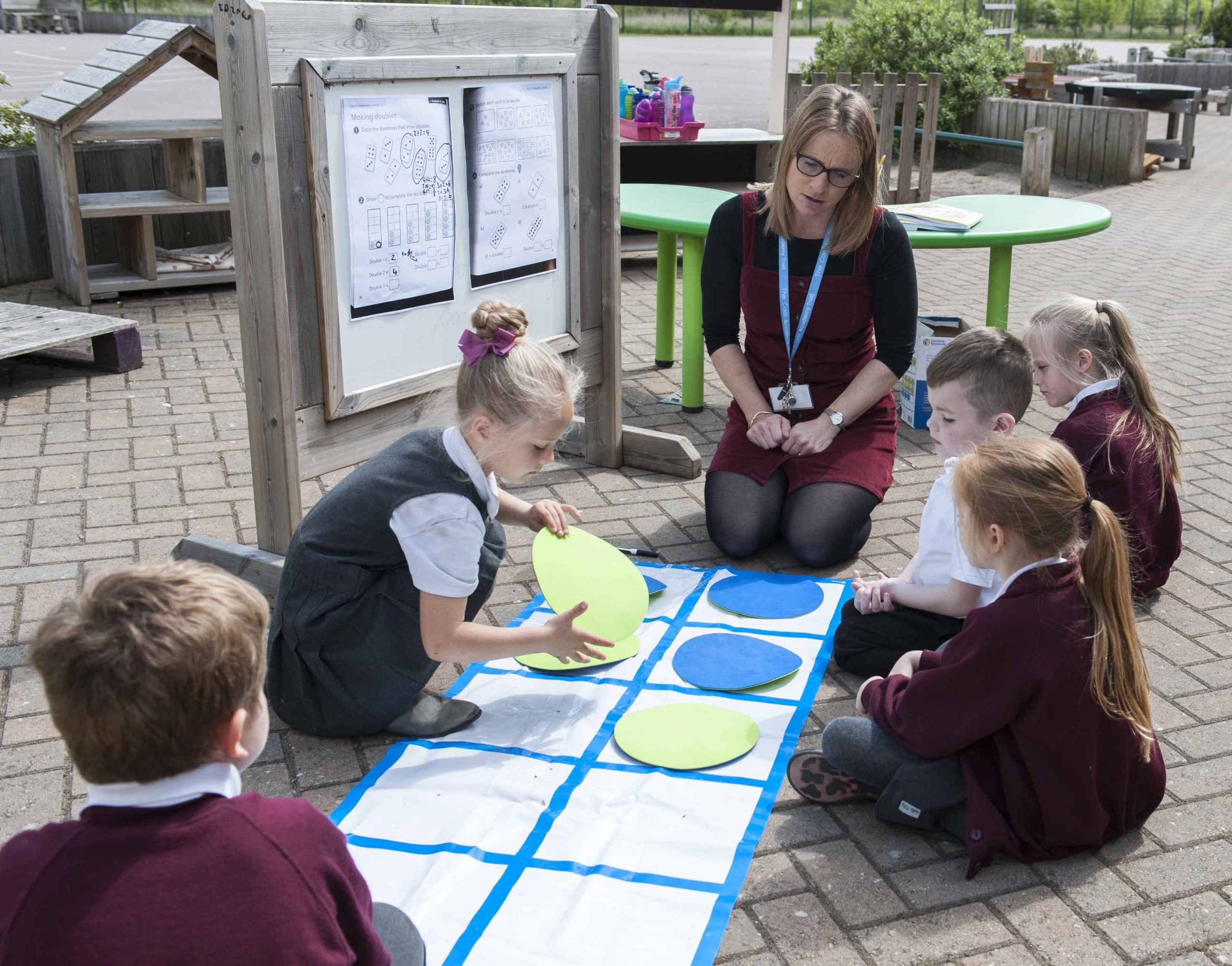
All classrooms have access to the Key Stage 1 Agora, which provides additional working space, as well as an outdoor learning area that supports practical and collaborative activities.
Lower Key Stage 2 comprises two Year Three classes and two Year Four classes for children aged 7 to 9 years. The Year Three classes are Squirrels and Rabbits, and the Year Four classes are Owls and Woodpeckers. Teaching assistants work across the phase to support learning and ensure children are well supported.
Children access Lower Key Stage 2 each morning through the courtyard, where teachers greet them from 8.45am. They leave through the same doors at 3.15pm.
Classrooms benefit from access to the Key Stage Two Agora, providing flexible working space, as well as an outdoor area that supports practical and experiential learning.
Upper Key Stage 2 includes two Year Five classes and two Year Six classes. The Year Five classes are Badgers and Foxes, and the Year Six classes are Wolves and Bears. A team of teaching assistants supports learning across the phase.
Children enter Upper Key Stage 2 each morning from the field side, where teachers welcome them from 8.45am. They are dismissed from the same doors at 3.15pm.
All classrooms have access to the Key Stage Two Agora, offering additional working space, along with an outdoor learning area that supports a wide range of curriculum activities.
Subject overviews
Intent
Art at Jeavons Wood aims to nurture confident, expressive young artists who can explore ideas, develop technical skills and appreciate the work of significant artists. We want children to use creativity as a tool for communication, wellbeing and personal expression.
Implementation
Children study art weekly through a progressive curriculum covering drawing, painting and mixed media. They learn about influential artists and take part in community‑led initiatives such as Artscape, which supports creativity and wellbeing through nature‑based art. Early Years pupils attend Drawing and Scribble Club, and whole‑school collaborative projects, such as our mural, enrich the curriculum.
Impact
Pupils develop secure artistic skills, confidence and enjoyment in creative expression. They talk about artists with understanding, apply techniques independently and use art as a positive outlet for wellbeing. Collaborative projects strengthen community identity and support smooth transitions across the school.
Intent
Our computing curriculum aims to develop digitally literate, creative and responsible users of technology. We want children to be safe, resilient and confident in an increasingly digital world.
Implementation
Children follow a structured curriculum that teaches computing skills, digital safety and responsible online behaviour. Shared iPads support collaboration and reflection, and pupils use Seesaw from Foundation Stage onwards, supported by Year 6 digital leaders. Knowledge organisers and curriculum maps guide progression.
Impact
Pupils become confident, safe and independent users of technology. They apply computing skills across the curriculum, make informed digital choices and demonstrate resilience and responsibility online. Their digital fluency prepares them well for future learning.
Intent
Design Technology at Jeavons Wood aims to develop creative problem‑solvers who can design, make and evaluate products with purpose. We want children to gain practical skills and an understanding of mechanisms, structures and food technology.
Implementation
DT is taught weekly each half‑term through a progressive curriculum covering mechanisms, construction and cooking. Children learn to plan, create and evaluate products, and benefit from access to a dedicated cooking space where they develop essential food preparation skills.
Impact
Pupils gain confidence in designing and making, applying technical knowledge with increasing independence. They develop practical life skills, including cooking, and can explain the purpose and effectiveness of their designs. By Year 6, children can prepare a full meal and articulate the design process clearly.
Intent
Our English curriculum aims to develop fluent readers, articulate speakers and confident writers who can communicate effectively and enjoy literature. We want every child to see themselves as a reader and writer.
Implementation
Early reading is taught through the Little Wandle phonics programme, with daily lessons, regular assessment and targeted keep‑up sessions. Children access matched reading books and progress to Accelerated Reader when fluent. Guided Reading deepens comprehension, and writing is taught through high‑quality texts, modelling and purposeful tasks. Grammar, spelling and editing are taught discretely and embedded in writing lessons.
Impact
Pupils become fluent, enthusiastic readers who engage with a wide range of texts. They write with increasing accuracy, creativity and control, applying taught skills independently. Children develop a lifelong love of reading and the confidence to communicate effectively in different contexts.
Intent
Geography aims to develop children’s understanding of the world, its people and environments. We want pupils to become curious, informed global citizens with strong locational and fieldwork skills.
Implementation
Geography is taught weekly in half‑termly units based on the National Curriculum. Children study places, settlements and mapping skills, supported by visits, visitors and cross‑curricular links such as the Great Fire of London. Key themes run through all units to build secure geographical understanding.
Impact
Pupils develop strong knowledge of human and physical geography and can use maps, fieldwork and vocabulary confidently. They make connections across learning, talk about places with understanding and show curiosity about the wider world.
Intent
Our history curriculum aims to develop children’s understanding of the past, helping them make sense of how people and events have shaped the world. We want pupils to think critically, ask questions and build chronological understanding.
Implementation
History is taught weekly in half‑termly units covering British and world history. Learning is enriched through visitors, visits and hands‑on exploration using our History Curiosity Shop. Key historical themes support progression in knowledge and disciplinary skills.
Impact
Pupils develop secure chronological understanding and can explain historical events using appropriate vocabulary. They think critically, make connections across periods and show enthusiasm for learning about the past.
Intent
Maths at Jeavons Wood aims to develop confident, curious mathematicians who understand mathematical structures and can apply their knowledge fluently. We want all children to believe they can succeed in maths.
Implementation
We follow a mastery approach that prioritises fluency, reasoning and problem‑solving. Lessons use representations, mathematical talk and carefully chosen tasks to deepen understanding. Fact fluency is taught alongside conceptual learning, and teachers collaborate across the Trust and Maths Hub to refine practice.
Impact
Pupils develop deep, secure mathematical understanding and can explain their thinking confidently. They apply skills independently, show resilience when solving problems and demonstrate strong number sense. Children leave us well‑prepared for the next stage of their mathematical journey.
Intent
Our music curriculum aims to inspire a love of music, develop musical skills and provide rich opportunities for performance. We want children to appreciate, create and enjoy music as part of school life.
Implementation
Music is taught through the Kapow scheme, ensuring progression in listening, composing and performing. Children take part in singing assemblies, productions and choir opportunities, including participation in Young Voices. Specialist teaching enhances the quality of provision.
Impact
Pupils develop musical confidence, skills and enjoyment. They perform with pride, understand musical concepts and appreciate a range of genres. Music contributes positively to wellbeing, community and school culture.
Intent
PE aims to develop physically confident, active children who enjoy sport and understand the importance of health and fitness. We want pupils to experience a wide range of physical activities and develop lifelong healthy habits.
Implementation
Children receive two hours of PE weekly, including indoor and outdoor disciplines. Swimming is taught in Year 5, with additional support in Year 6. Clubs, sports leaders and external providers enrich provision, and pupils participate in events such as cross‑country and school clubs.
Impact
Pupils develop physical skills, teamwork and resilience. They understand how to stay active and healthy and show enthusiasm for sport. Many take part in clubs and competitions, and all leave able to swim at least 25 metres.
Intent
PSHE at Jeavons Wood aims to support children’s emotional, social and physical development, helping them become confident, compassionate and responsible individuals.
Implementation
PSHE is taught through circle times, direct teaching and collaborative activities. Children learn about relationships, wellbeing and citizenship, supported by leadership roles such as School Council and Peer Mediators. School values are embedded throughout daily life and celebrated regularly.
Impact
Pupils develop strong social skills, emotional awareness and a sense of responsibility. They demonstrate the school values, contribute positively to the community and show confidence in managing friendships, wellbeing and decision‑making.
Intent
RE aims to develop children’s understanding of major world religions and humanism, fostering respect, curiosity and thoughtful reflection.
Implementation
Children learn about beliefs, practices and key questions across religions. Lessons encourage discussion, comparison and respectful sharing of views. Visitors and visits to places of worship enrich learning, and reflection time is inclusive for all pupils.
Impact
Pupils develop respect for different beliefs and can discuss similarities and differences with understanding. They reflect thoughtfully, ask meaningful questions and demonstrate tolerance and empathy.
The right to withdraw from RE
In England, parents and carers have the right to withdraw their children from RE. We would hope that you would contact us in the first instance so that we can discuss concerns and together put alternative arrangements in place to support your child.
You will find more information on the right to withdraw and how to handle an application at https://www.natre.org.uk/
Intent
Science aims to develop curious, analytical learners who understand scientific concepts and can work scientifically. We want children to enjoy exploring the world through investigation.
Implementation
Science is taught weekly in mini‑units covering key knowledge, skills and concepts. Lessons include practical enquiry, scientific representation and learning about significant scientists. Whole‑school events, such as Science Day, deepen engagement.
Impact
Pupils develop secure scientific knowledge and can plan, carry out and explain investigations. They use scientific vocabulary confidently and show enthusiasm for discovery. Science is consistently one of the subjects children say they love most.
Intent
Our Spanish curriculum aims to develop confident linguists who enjoy learning a new language and understand its value in a global society.
Implementation
Children are introduced to a range of languages across school, with Spanish taught weekly from Year 3 by a trained specialist. Year 6 pupils receive lessons delivered in Spanish by a secondary teacher to support progression and transition.
Impact
Pupils develop strong vocabulary, pronunciation and writing skills in Spanish. They gain confidence in communicating in another language and are well‑prepared for secondary language learning.